 Haytham Galal
Mobile App Design
EmoHaven — Designing for Emotional Awareness in Relationships
Client
Personal Project
Role
Lead Product Designer
Year
2026
Duration
20 days
Overview
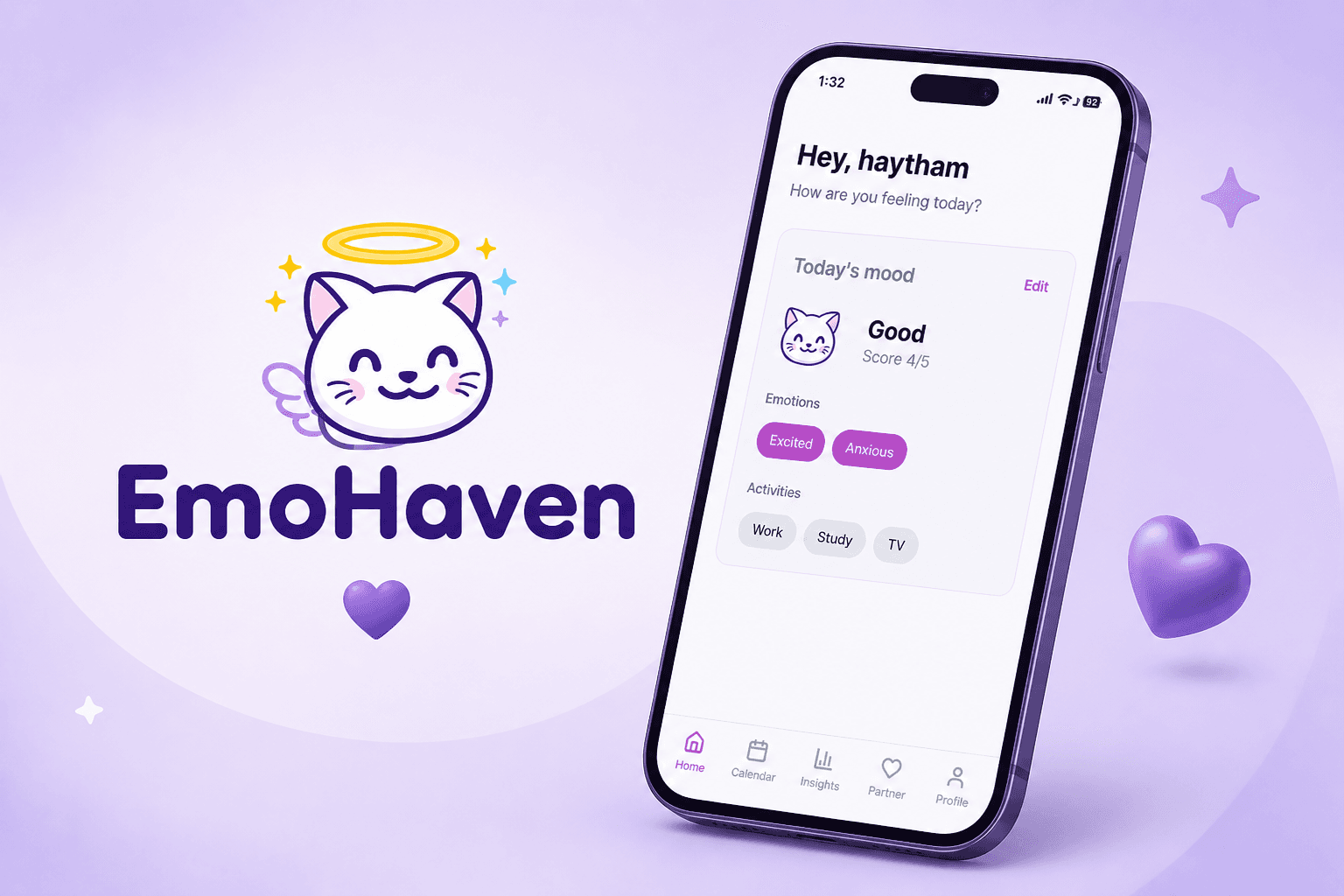
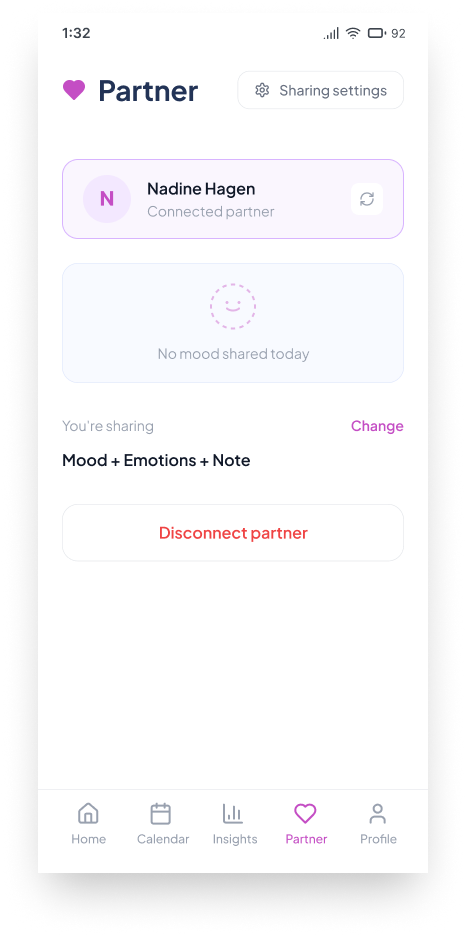
EmoHaven is a mobile-first mood tracking app designed to help couples build emotional awareness and improve communication through daily, lightweight sharing.
As a product designer, I led the end-to-end design of the experience — from problem framing and user research to iterative feature development. Along the way, I expanded my role into product thinking, system design, and data modeling to better understand how products evolve over time.
Context & Motivation
The idea for EmoHaven started from a personal experience.
During a relationship coaching program with my partner, we were given a daily exercise to share our emotions consistently. The goal was to build emotional awareness and improve communication. However, the process quickly revealed friction.
- —
It was manual
- —
It required effort and discipline
- —
There was no way to track patterns over time
When I explored existing products, I found:
- —
Mood tracking apps focused on individuals
- —
Relationship apps focused on communication
- —
But none helped couples passively understand each other's emotional states over time
A product that allows couples to effortlessly share and understand each other's emotions on a daily basis.
User Research
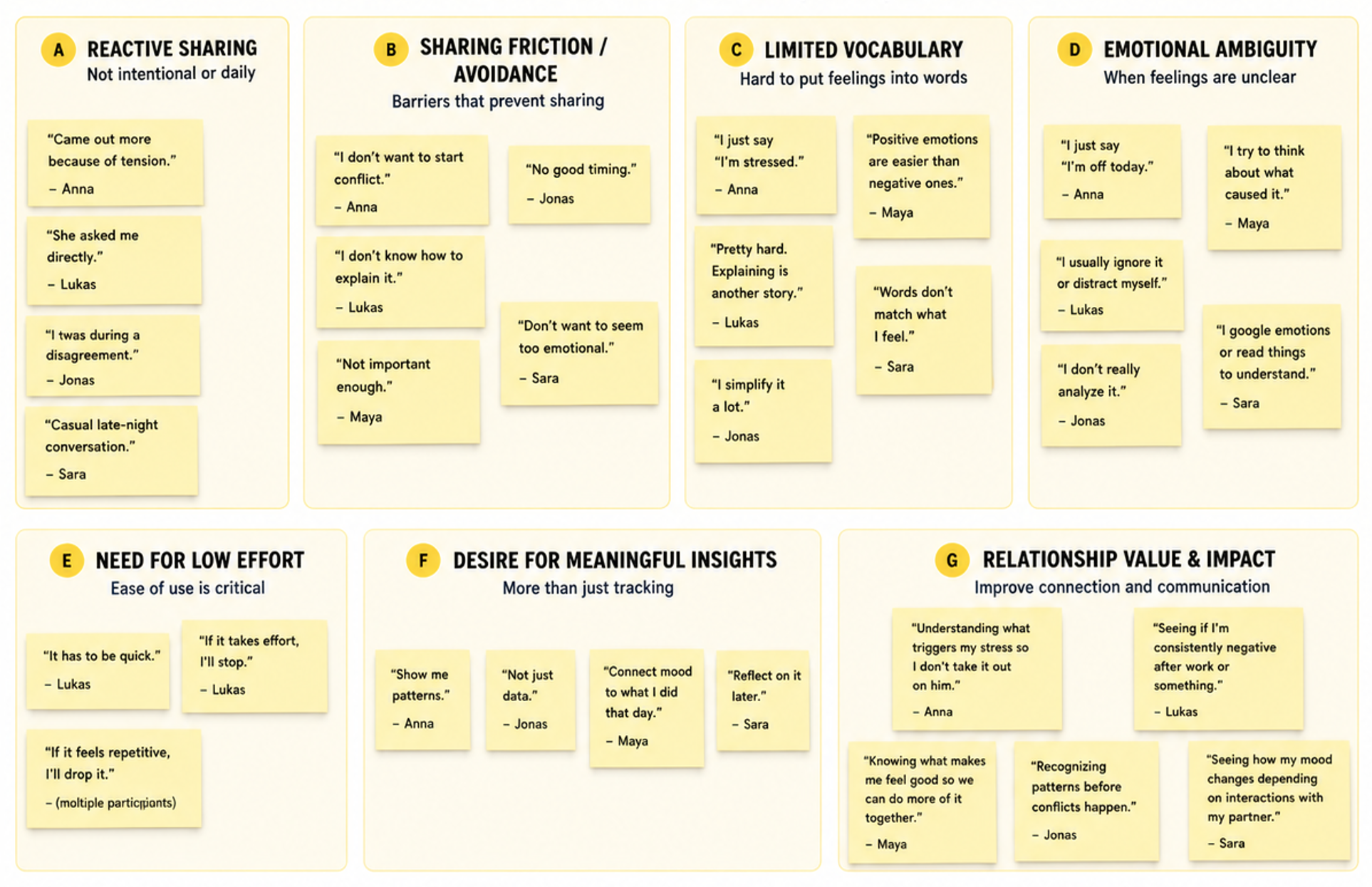
To validate the problem beyond my own experience, I observed and tested the concept with myself and my partner, and two additional couples.
Key insights
01
Emotional sharing is inconsistent
- —
People want to share, but don't do it daily
- —
It depends on mood, memory, or conflict
02
Users struggle to name emotions
A recurring pattern:
I feel something… but I don't know what to call it
- —
Emotional vocabulary is limited
- —
Users need guidance to identify feelings
03
Users want awareness, not just logging
Tracking alone was not enough. Users were more interested in:
- —
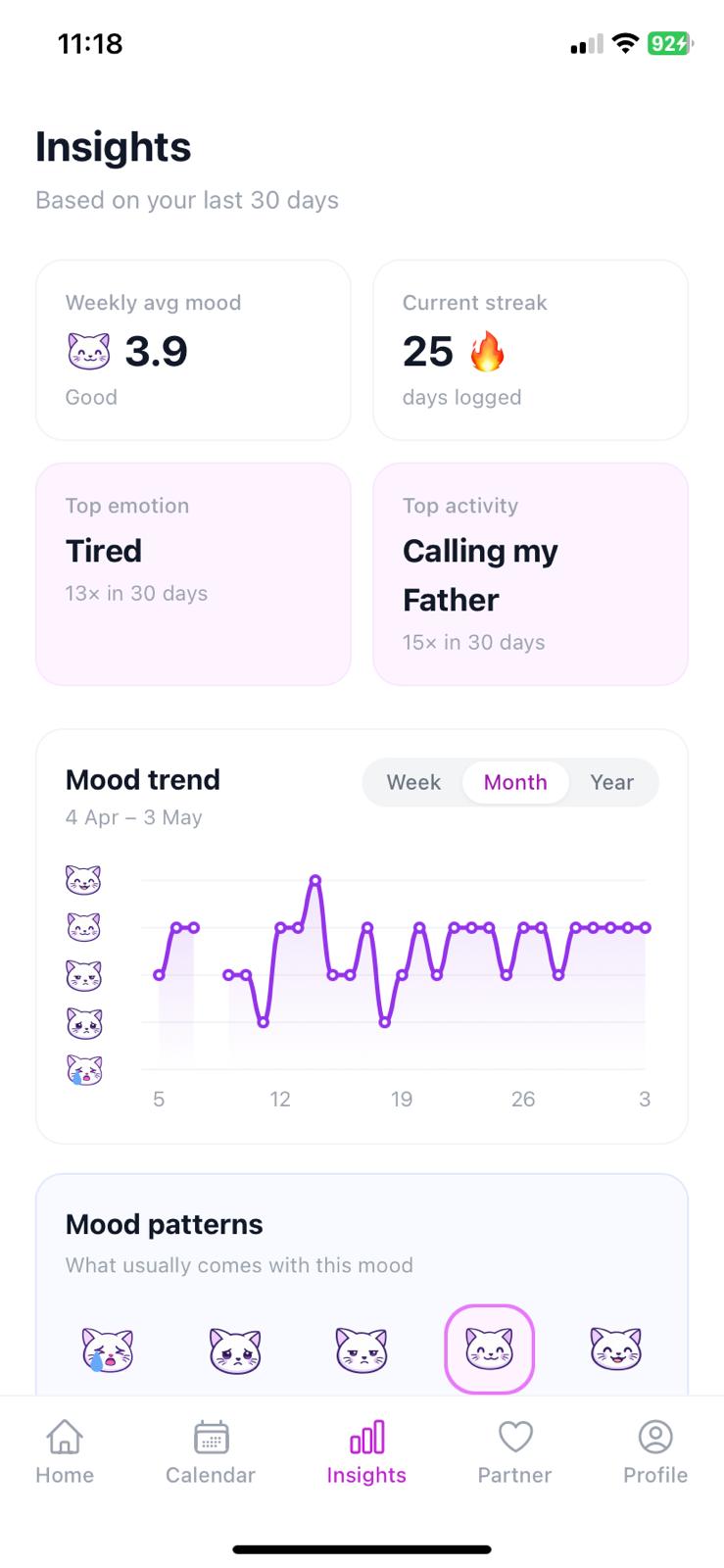
Understanding patterns
- —
Connecting emotions to context
- —
Improving communication with their partner
Problem & Goal
Couples lack a simple, consistent way to stay aware of each other's emotional state over time.
More specifically:
- —
Emotional check-ins are inconsistent and effort-heavy
- —
Communication often happens only when something is wrong
- —
There is no passive way to understand patterns in a partner's emotional state
- —
Existing tools do not combine daily emotional tracking, shared visibility, and long-term understanding
The opportunity
Design a system that enables continuous emotional awareness, not just reactive communication.
The goal
- —
Share emotional state daily with minimal effort
- —
Build awareness of each other's moods over time
- —
Reduce friction in emotional communication
- —
Move from reactive conversations to proactive understanding
Iteration & Learning
Foundation → Evolution
The initial version focused on building a strong foundation for meaningful emotional tracking.
Core features introduced
Key decisions & learnings
01 · Challenge
Simplicity vs depth
A single mood input is easy — but without context, it lacks value.
Solution
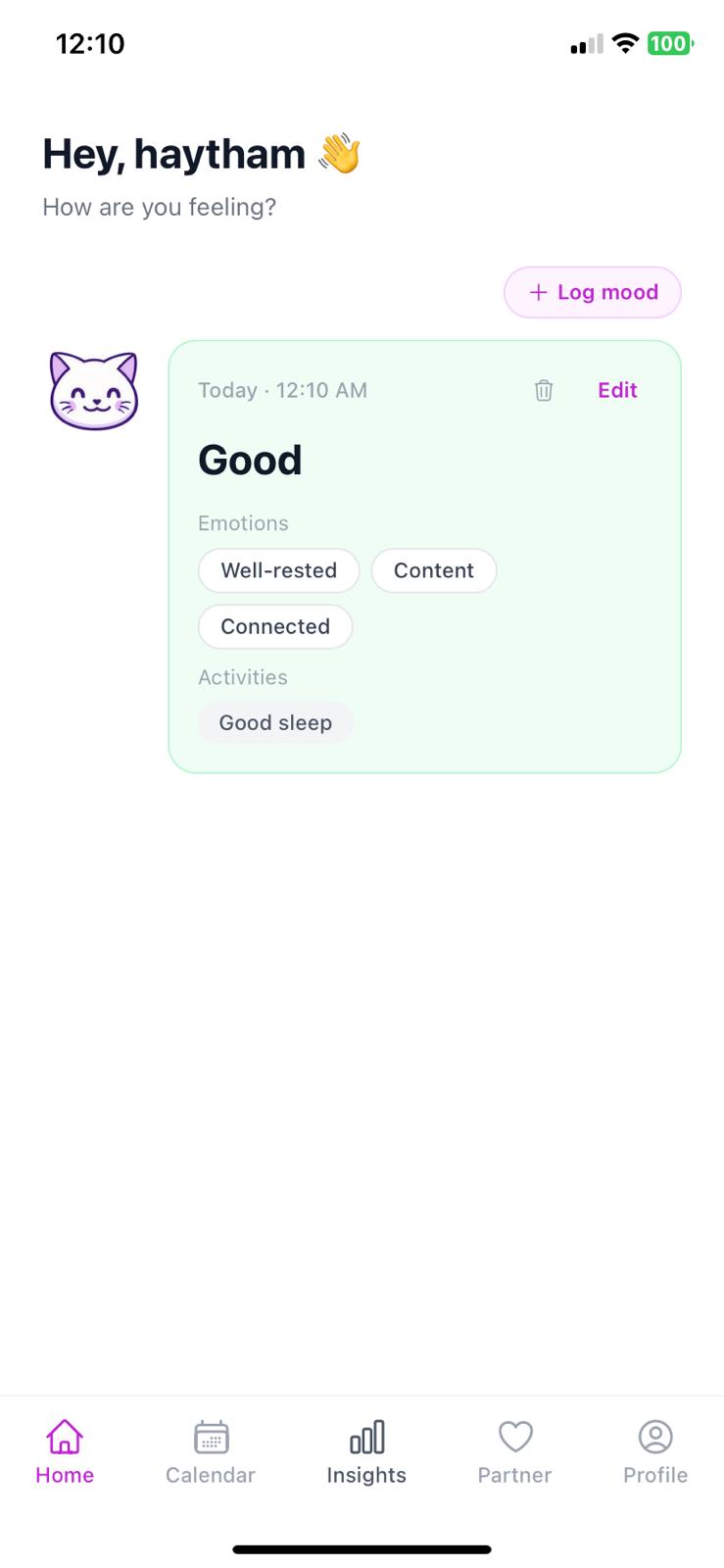
Layered input: mood → emotions → activities. Each layer adds meaning without adding friction upfront.
02 · Challenge
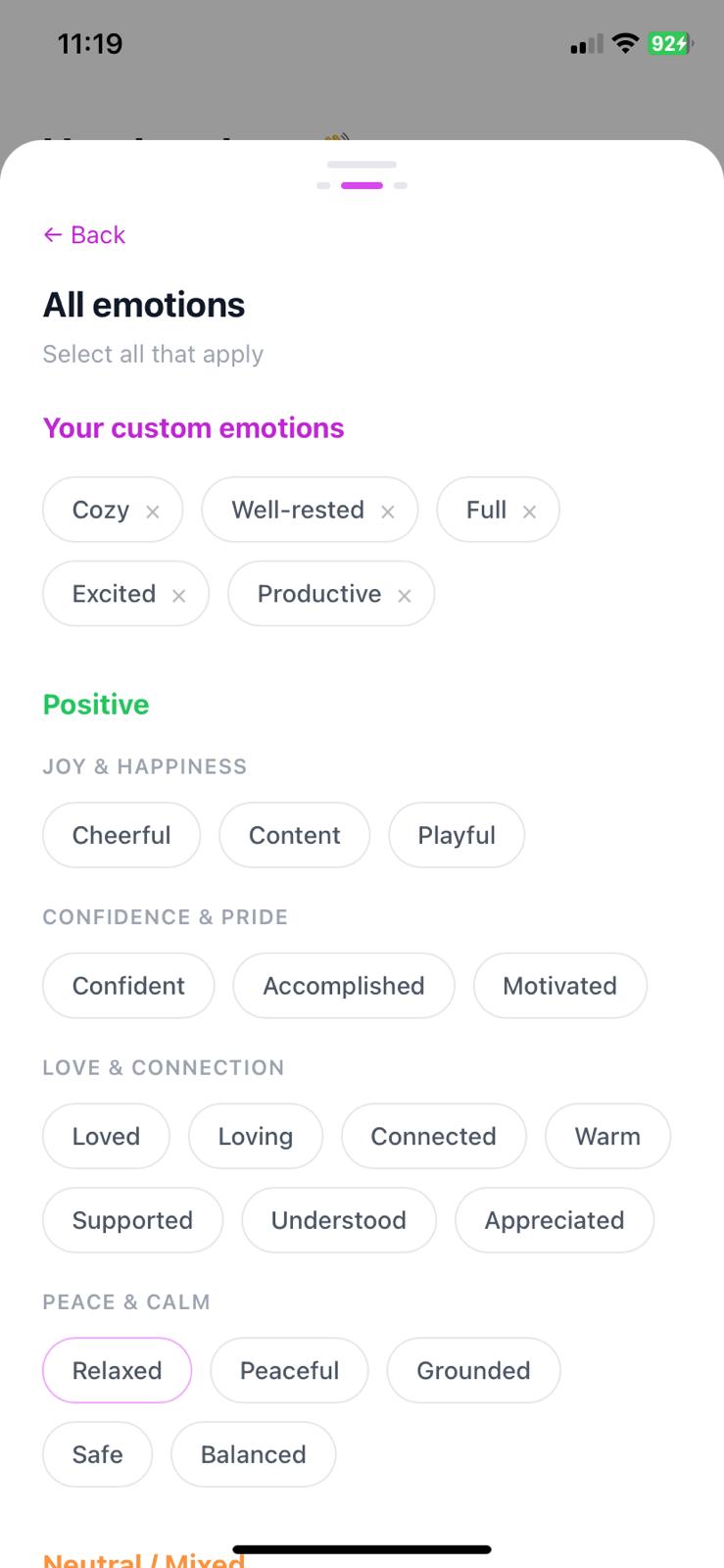
Emotional vocabulary is a core feature
Users struggled to describe their feelings, leading to vague or skipped entries.
Solution
Introducing a large emotion list improved clarity, enabled better reflection, and strengthened communication between partners.
03 · Challenge
Context drives meaning
Mood data alone is not enough to understand why someone feels the way they do.
Solution
Adding activities connects emotions to behavior and enables pattern recognition over time.
04 · Challenge
Insights depend on input quality
Without rich, consistent data, meaningful trends and patterns cannot emerge.
Solution
Once richer data was available, tracking shifted to understanding — trends, correlations, and patterns became possible.
Timeline Hypothesis — Critical Product Insight
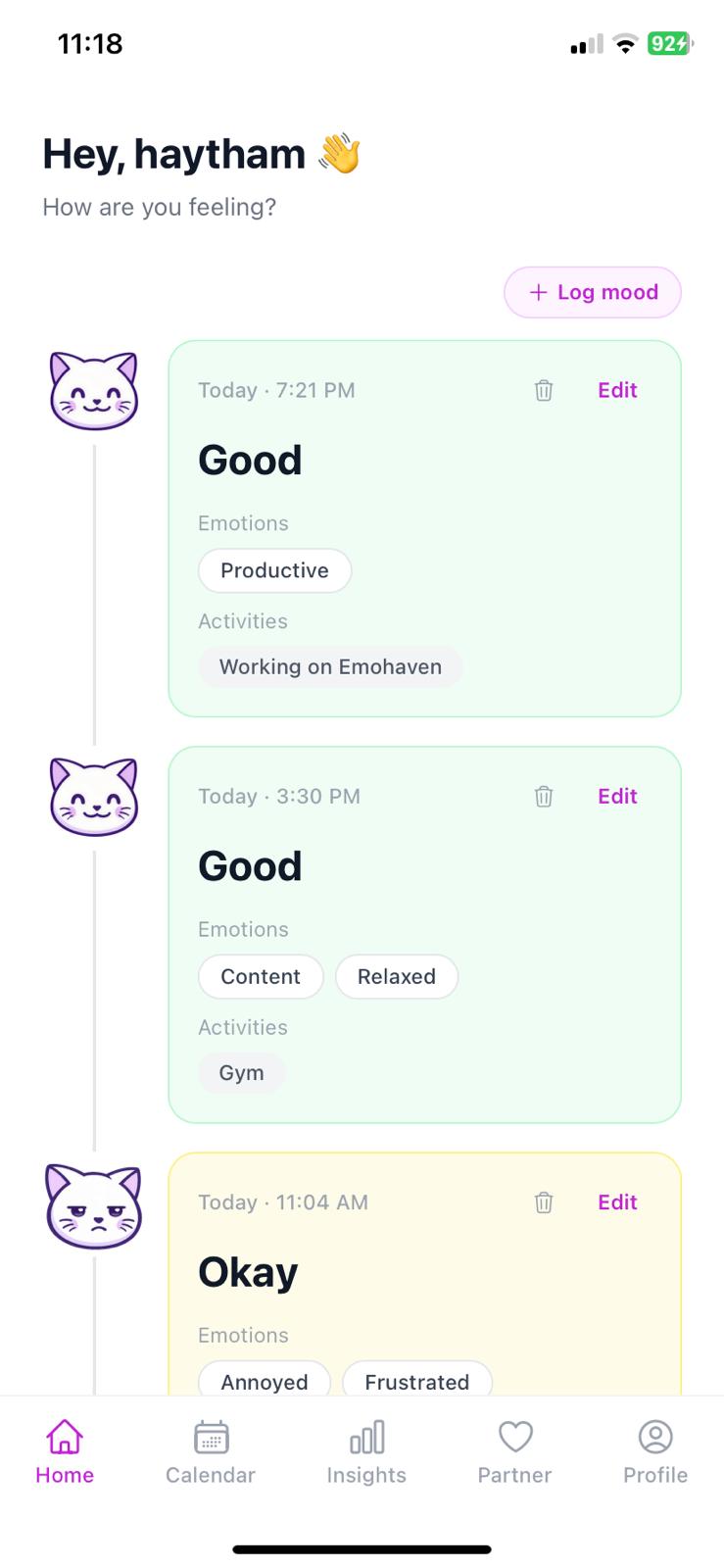
Through continuous use, a key limitation emerged: mood is not static — it changes throughout the day.
A single daily entry does not reflect real emotional experience
This led to a new direction:
- —
Support multiple entries per day
- —
Introduce a timeline-based experience
- —
Move from daily snapshots to emotional flow
Final Reflection
EmoHaven started as a solution for couples, but through iteration it became a broader exploration of emotional awareness.
The biggest shift was moving from designing a feature to designing a system that evolves with user behavior.